
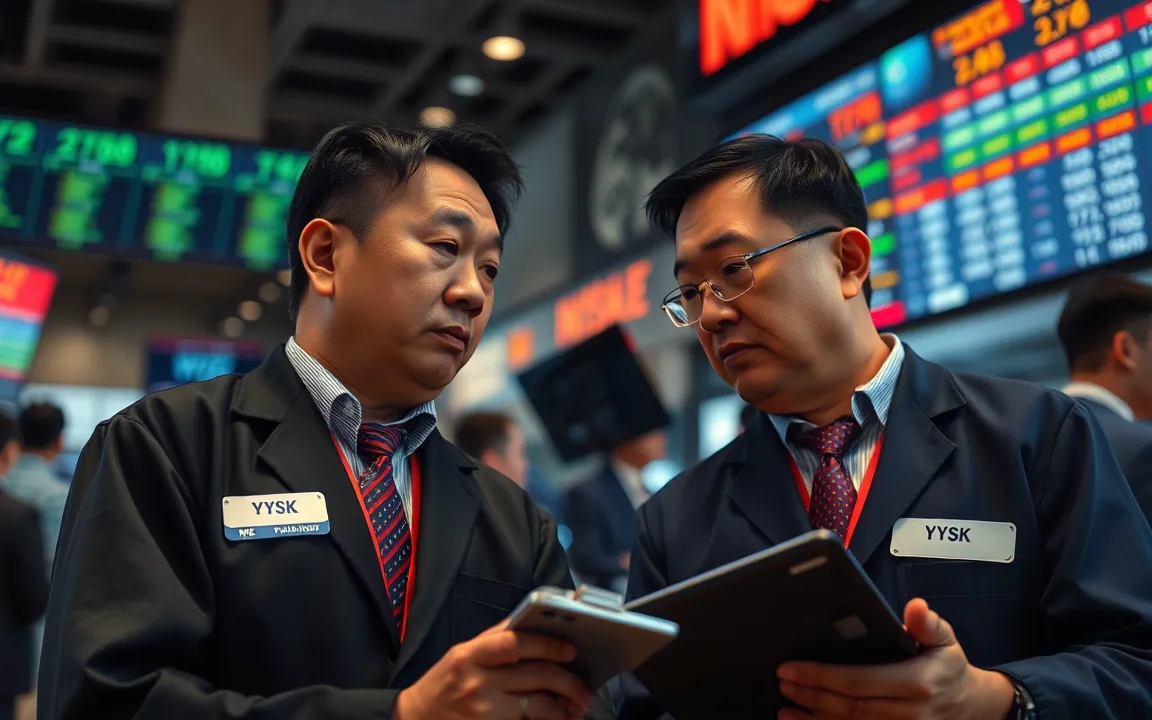
Asian stocks rallied on Wednesday as investors returned to semiconductor shares after a bruising sell-off, taking their cue from a Wall Street rebound even as Brent crude pushed further above $91 a barrel.
MSCI’s Asia-Pacific gauge outside Japan gained 1.2%, while South Korea’s Kospi surged more than 6% and Japan’s Nikkei 225 climbed 1.9%.
The move followed a 0.9% advance in the S&P 500 and a 5.2% jump in the Philadelphia Semiconductor Index on Tuesday.
The rebound suggests investors are willing to revisit the AI trade, but only after recent losses reset valuations and raised the bar for earnings.
Chip rebound broadens across Asia
Technology shares led the regional advance after fresh trade data pointed to resilient demand for advanced hardware.
South Korea’s semiconductor exports jumped 180.6% from a year earlier in the first 20 days of July, helping total exports rise 52.3%.
Taiwan also reported June export orders of $95.3 billion, up 59.4% from a year earlier.
Westpac strategists said markets were putting more weight on the recovery in technology shares than on the latest geopolitical risks.
The scale of the rebound, particularly in Seoul, also reflected bargain hunting after the Kospi’s recent losses and the unwinding of bearish positions.
Alphabet and Tesla become the next test
Attention now shifts to Alphabet and Tesla, which both report after the US close on Wednesday.
Alphabet’s results will be judged on Google Cloud growth, spending on data centres and progress in commercialising its AI products.
Investors are also watching whether delays to key model launches are affecting its competitive momentum.
Tesla faces a different test. The market will focus on automotive margins, cash generation and the cost of expanding its robotaxi and humanoid-robot programmes.
After the recent correction in AI-linked shares, strong revenue alone may not be enough; investors want clearer evidence that heavy investment can translate into durable returns.
Oil and tariff risks cap the relief
The rally unfolded despite Brent rising 0.6% to $91.55 a barrel after Saudi tankers changed course in the Red Sea following Houthi threats against shipping linked to the kingdom.
The warning raises the risk that disruption spreads from the Strait of Hormuz to the Bab el-Mandeb, forcing longer routes and higher freight and insurance costs.
Pharmaceutical stocks also moved into focus after President Donald Trump outlined a phased tariff plan for generic drugs.
Imports would remain duty-free for two years from August 1, before facing a 100% levy for one year and 200% thereafter.
For now, Asia’s rebound is being driven by renewed confidence in chips.
Its durability will depend on whether earnings validate the AI spending cycle before higher oil and trade barriers revive inflation concerns.
The post Kospi jumps 6% as Asia’s battered semiconductor trade rebounds appeared first on Invezz
