
Artificial intelligence has become the defining investment story of the decade, propelling companies like Nvidia, Broadcom, and Micron to record valuations while helping drive the S&P 500 to successive highs.
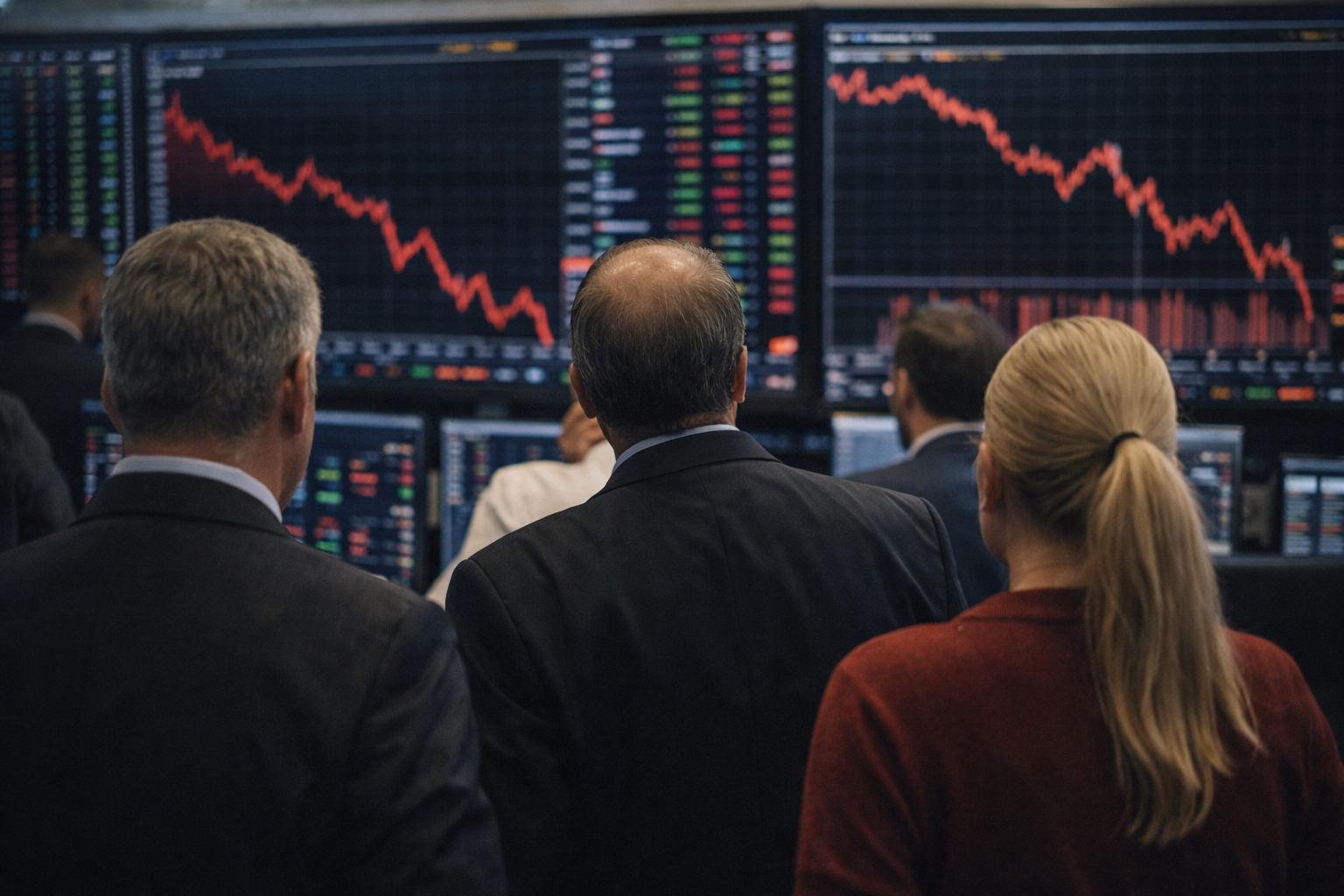
But every transformative technology has, at some point, been accompanied by concerns that optimism has run too far.
That question formed the basis of the latest episode of Zero Sum, where Invezz’s Harsh Vardhan spoke with Richard Peterson, behavioural economist, founder of MarketPsych, and the market sentiment expert once described by the Associated Press as Wall Street’s “top psychiatrist.”
Drawing on nearly three decades of sentiment data, Peterson explained why AI still has room to grow, where speculative excess is beginning to emerge, and what investors should watch next.
AI rally has real profits behind it
Comparisons between today’s AI rally and the dot-com boom have become increasingly common, but Peterson argues the analogy only goes so far.
Unlike many internet companies at the turn of the century, today’s AI leaders are generating enormous revenues and cash flows.
“I mean Nvidia has enormous profits, Micron is making tremendous margins, so there’s real money, versus in the dotcom boom there wasn’t real revenue coming in.”
That, however, doesn’t eliminate the risk of a bubble. Peterson noted that technological revolutions typically follow a familiar pattern: early winners enjoy extraordinary profitability before competition inevitably arrives.
In AI, that competition is already emerging through rival chipmakers, custom silicon developed by hyperscalers, and increasingly capable Chinese alternatives.
Peterson argued that the real question for investors is not whether AI is a transformative technology, but whether current valuations leave enough room for intensifying competition and margin pressure as more companies enter the market.
Market sentiment often changes before prices do
Rather than relying solely on valuations or earnings forecasts, Peterson studies investor psychology.
MarketPsych monitors roughly 1,000 premium news outlets and dozens of investment-focused social media platforms across 28 languages, creating a historical record of how investors have felt about markets since 1998.
“We’re measuring how people feel… we’ve seen cycles since the dot-com boom.”
One consistent pattern has emerged. Optimism typically peaks early in a market cycle before gradually fading, even while stock prices continue climbing.
Social media often becomes sceptical well before traditional financial media, creating an early signal that expectations may be outrunning reality.
For investors, sentiment isn’t a prediction tool on its own, but it can provide valuable context when enthusiasm becomes one-sided.
Speculation is spreading
While Peterson stopped short of calling the entire AI trade a bubble, he pointed to several developments that resemble previous speculative cycles.
Among them are leveraged single-stock ETFs, which amplify gains and losses, along with a growing pipeline of AI-related IPOs expected to absorb billions of dollars of investor capital.
He argued that bubbles often end not because the underlying technology fails, but because liquidity becomes stretched as more companies rush to tap investor demand.
Potential listings from companies such as OpenAI and Anthropic, following SpaceX’s high-profile public debut, could eventually reduce the speculative capital available to existing market leaders.
The next AI winners may come from deeper inside the supply chain
Another key takeaway was that investors may need to look beyond the headline names.
Peterson believes networking companies, optical infrastructure providers, and semiconductor equipment manufacturers remain well positioned as AI infrastructure continues to expand.
At the same time, he warned that some memory makers and server manufacturers are beginning to exhibit the elevated sentiment typically associated with late-stage rallies.
Rather than viewing AI as a single trade, he argued investors should expect multiple cycles to emerge across different parts of the ecosystem.
AI may reshape jobs
The discussion also tackled one of AI’s biggest societal concerns: employment.
While layoffs are frequently attributed to artificial intelligence, Peterson argued the data tells a more nuanced story.
He pointed to rising software engineering vacancies and research suggesting companies adopting AI are often expanding headcount elsewhere, rather than simply replacing workers.
“I think AI will create more jobs, and I think that’s what we’re seeing.”
The challenge, he said, lies less in whether AI creates employment than in how quickly workers and businesses adapt to changing skill requirements.
The episode concludes with Peterson’s latest market outlook, including why he remains constructive on networking infrastructure, cautious on overheated pockets of the AI supply chain, and increasingly optimistic about nuclear power, solar, and battery storage as long-term beneficiaries of the AI buildout.
Watch the full episode of Zero Sum for the complete discussion and subscribe for more conversations exploring the forces shaping markets, money, and geopolitics.
The post I think AI will create more jobs, says Dr Richard Peterson, founder of MarketPsych appeared first on Invezz
