
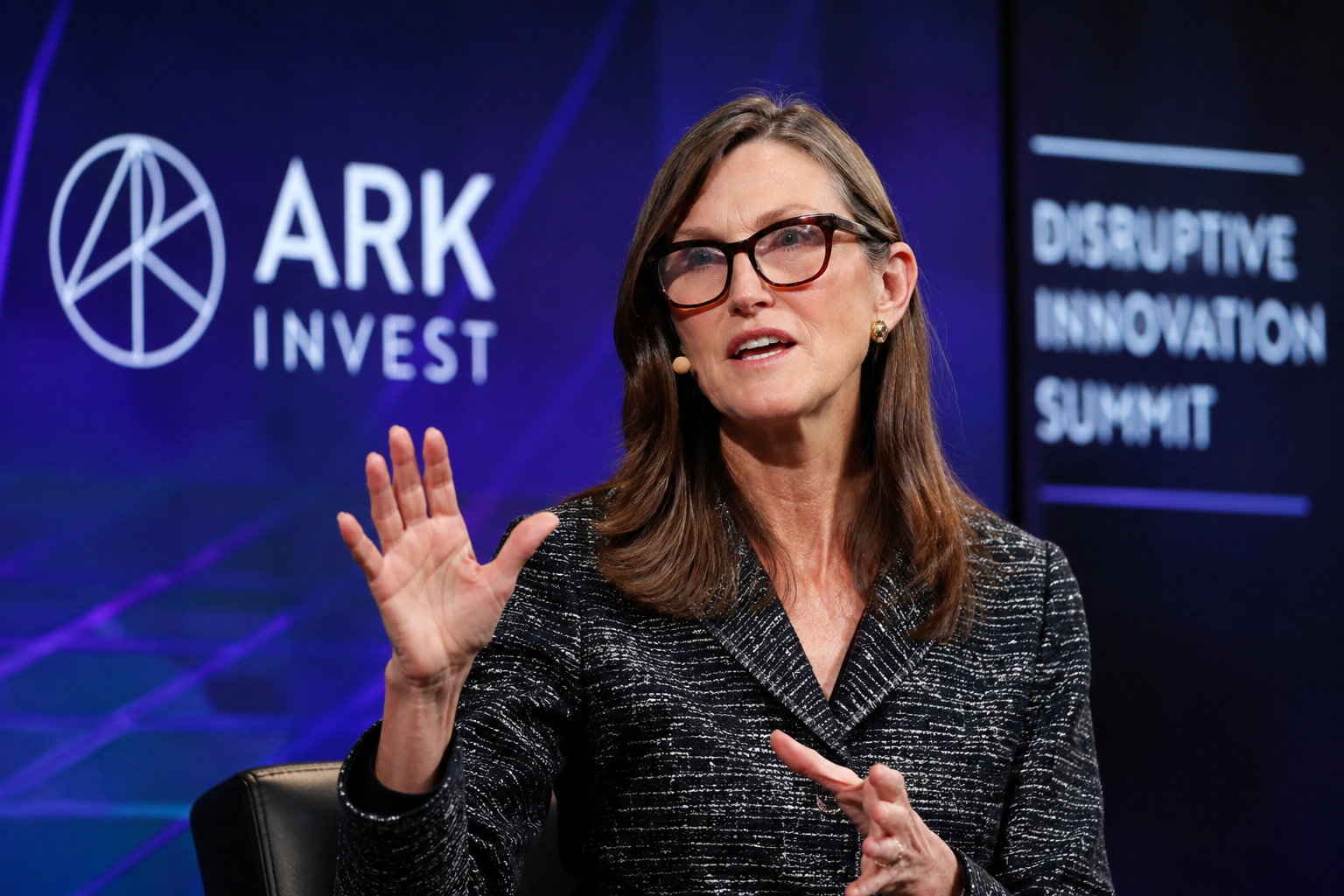
SpaceX stock (NASDAQ: SPCX) is entering the week with a different tone after Cathie Wood’s ARK Invest bought post-earnings weakness just as one of the stock’s biggest technical overhangs began to ease.
ARK bought 114,815 SpaceX shares through the ARK Innovation ETF on August 7, worth about $13.2 million.
SpaceX surged 15.83% that day to $133.11, leaving it just below its $135 IPO price.
ARK’s timing suggests Wood sees the recent weakness as a buying opportunity, with the post-earnings sell-off and lock-up pressure potentially creating the conditions for a stronger recovery if SpaceX’s growth story stays intact.
Wood buys after SpaceX’s biggest public-market scare
SpaceX’s first earnings report as a listed company showed strong growth, but one spending dominated the reaction.
Second-quarter revenue jumped 92% from a year earlier to $7.8 billion, while the company posted a $541 million net loss, or 9 cents a share, narrower than analysts expected.
Total capital expenditure reached $18.4 billion, including roughly $15.8 billion tied to AI infrastructure.
The shares sank nearly 14% on August 5 as investors questioned how quickly that spending would translate into cash flow.
ARK bought after that shock. Argus Research analyst Steven Silver upgraded SpaceX to Buy from Hold on August 7, setting a $160 price target.
TipRanks reported that Silver called the quarter “strong operational performance” and said the company’s “robust growth outlook” outweighed concern over higher AI spending.
For Wood, the wager appears simple: the spending hurting the stock today may be building the businesses investors value tomorrow.
Lock-up passed without the feared selling wave
The timing of ARK’s purchase matters because August 6 had been viewed as a pressure point.
About 911.5 million SpaceX shares became eligible for trading as the first major insider lock-up expired, more than doubling the previous float.
Instead of collapsing under new supply, the stock rose 6.1% to $114.92 on Thursday before Friday’s 15.83% surge.
Morgan Stanley analyst Adam Jonas described the expiry as an opportunity to buy the stock cheaply.
Jonas sees SpaceX reaching $300 by mid-2027.
Bernstein took that view after earnings. A team led by Douglas Harned maintained an Outperform rating and $239 target, telling Business Insider it saw nothing fundamentally negative in the report.
Wall Street sees upside, but capex remains the test
The bullish case now rests on whether SpaceX can turn its investment programme into faster revenue growth.
Oppenheimer maintained an Outperform rating and $250 target after earnings.
The firm brought forward its estimate for SpaceX to reach $1 trillion in annual revenue to 2032, citing faster AI build-out and monetisation, while acknowledging elevated capex remains a major concern.
Bank of America kept its Buy rating and $235 target, forecasting about $24.5 billion of AI revenue in 2026 and saying it had become more positive on SpaceX’s positioning across key markets.
Starlink adds another pillar. William Blair analyst Louie DiPalma highlighted third-generation satellites, which SpaceX says should provide roughly ten times the capacity of earlier versions.
The caution comes from Piper Sandler. The firm kept a Neutral rating and cut its target to $140, pointing to future lock-ups, rising 2027 capex and uncertainty around cancellable AI cloud contracts.
The post Why Cathie Wood is piling into SpaceX stock after its brutal post-earnings drop appeared first on Invezz
