
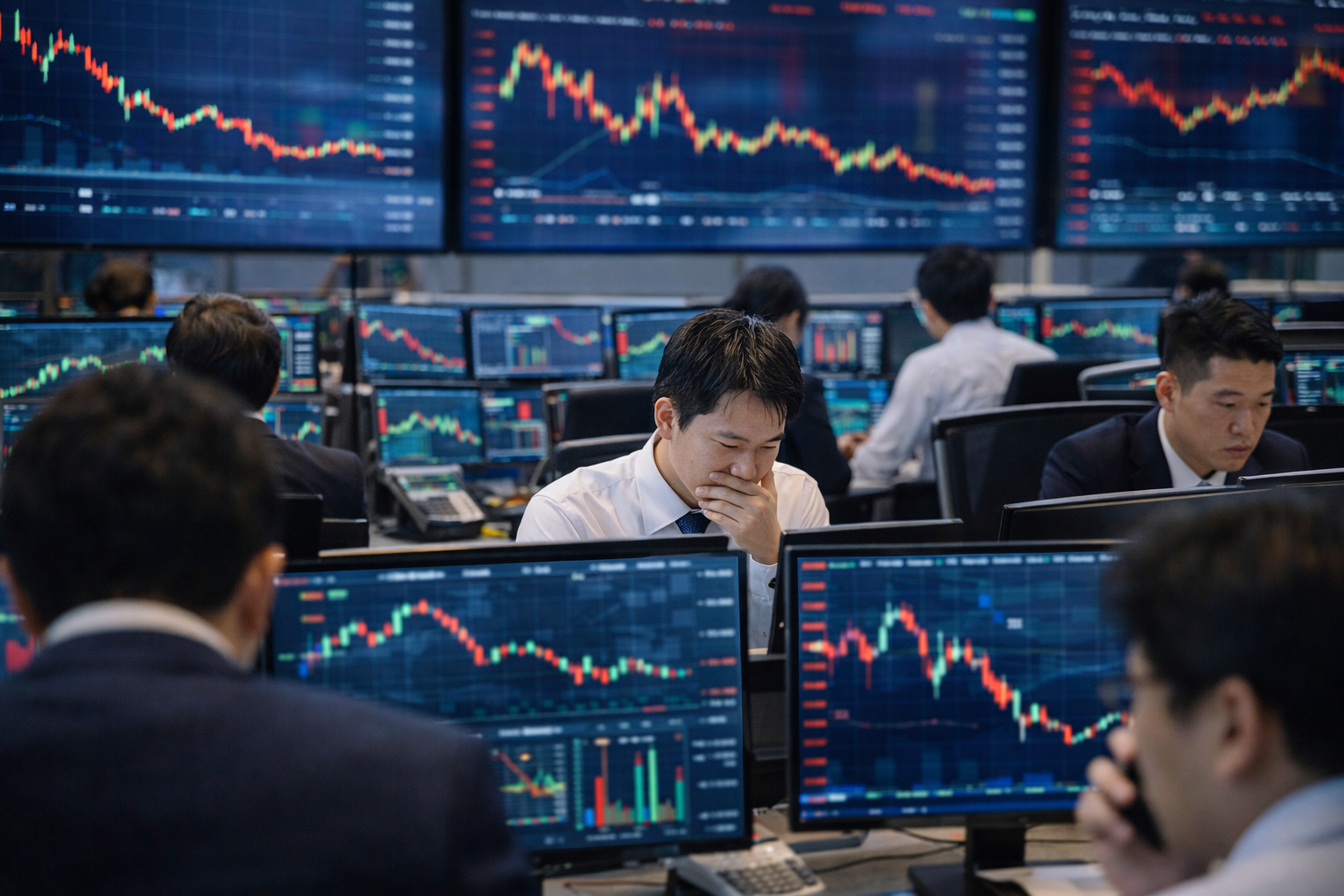
Samsung Electronics and SK Hynix surged in Seoul on Wednesday, defying a weaker overnight signal from Wall Street.
Samsung climbed more than 7% and SK Hynix more than 5% in morning trading, even as the Nasdaq Composite fell 0.6% on Tuesday amid Middle East concerns and caution ahead of US inflation data.
The divergence reflects a growing view that the recent Korean chip-stock sell-off ran ahead of fundamentals.
Fresh export data, stronger HBM pricing expectations and bullish bank commentary point to a memory cycle that may be tighter and longer than investors feared.
Memory cycle looks stronger than the market feared
The clearest evidence is coming from the physical memory market rather than broader technology stocks.
UBS analyst Timothy Arcuri said pricing for HBM4 and HBM4E is running “even stronger than our prior expectations,” according to MarketWatch.
UBS now expects HBM average selling prices to rise by about 79% year on year, up from its previous estimate of 67%.
That directly matters for Samsung and SK Hynix, which, alongside Micron, are the main suppliers of advanced memory used in AI accelerators.
There is also an unusual Nvidia signal. Nvidia is reportedly testing lower-memory configurations for its upcoming Rubin Ultra systems because of tight HBM supply.
Arcuri believes using less memory per accelerator could allow Nvidia to ship more accelerators, potentially increasing total HBM consumption.
South Korea’s latest trade data reinforces that demand remains powerful.
Semiconductor exports jumped 155.4% year on year to $9.95 billion during the first 10 days of August and accounted for 46.8% of total exports.
Morgan Stanley and Goldman say the correction went too far
The rally is also about valuation. Morgan Stanley said the sharpest phase of the memory-stock correction appears to have ended and described current valuations as a tactical re-entry opportunity.
The bank still expects strong demand for premium products such as HBM as AI data-centre investment expands.
Goldman Sachs has gone further. Its analysts told Business Insider that Korea’s AI-stock sell-off had gone too far and argued that the memory cycle could be stronger and last longer than previous upswings.
Goldman said accelerating AI-compute demand and severe supply shortages could support memory prices and profits for years.
The recent deleveraging has also cleaned up positioning, with assets in Korean leveraged ETFs and retail margin borrowing falling from their peaks.
A weaker Nasdaq matters less when memory leads
Tuesday’s Nasdaq decline was driven partly by broader macro concerns rather than a breakdown in semiconductor demand.
Amazon and Alphabet fell, while investors focused on rising oil prices, Middle East tensions and Wednesday’s US inflation report.
Samsung and SK Hynix are trading on their own earnings cycle.
HBM supply remains tight, next-generation pricing is beating expectations, Korean chip exports are surging and major banks are arguing that the recent correction created an entry point.
Risks remain as memory stocks are highly volatile, supply expansion could eventually soften pricing, and Chinese producers such as CXMT could become stronger competitors.
The post Why Samsung and SK Hynix are ripping higher despite a weaker Nasdaq appeared first on Invezz
