
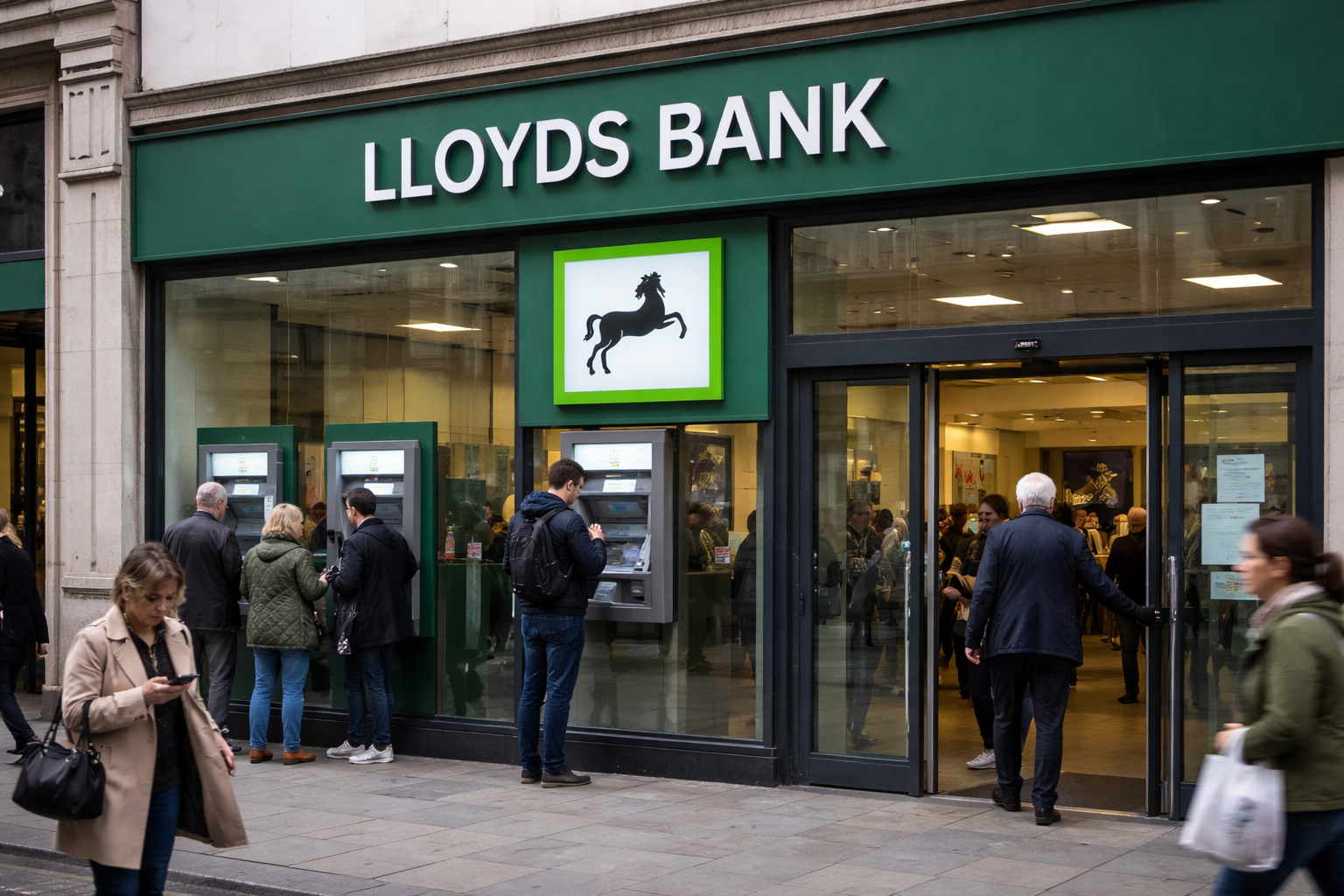
Lloyds’ share price has moved sideways in recent weeks and is hovering near its highest level of the year. The stock was trading at 114.70p on Monday, just a few pence below its year-to-date high of 118p. It remains 16.75% higher than at the start of the year and has gained 153% over the past five years. The stock currently has a dividend yield of 3.48%, slightly higher than the FTSE 100 average of 3%.
Lloyds Bank’s business is doing well this year
Lloyds Bank’s stock has outperformed the FTSE 100 Index this year, mirroring the performance of other European banks. This jump has happened as interest rates have remained at an elevated level this year.
The most recent second-quarter earnings report showed that its revenue continued doing well last quarter. Its retail customers jumped to over 28 million, with its commercial relationships hitting 1 million. Its mobile app has become the biggest digital bank in the UK, with its cost of doing business dropping by over £2 billion in the past few years.
The results showed that the net interest income rose by 9% in the year’s first half to £7.27 billion. It jumped by 4% to £3.7 billion in the second quarter of the year.
Its net income jumped to £9.74 billion in the year’s first half and to £4.9 billion in the second quarter. As a result, the statutory profit after tax jumped to over £3.12 billion in this period. Also, its impairment charges have dropped, even as the UK economy has remained in stagflation, which is characterized by higher inflation and slow economic growth.
Lloyds Bank has also done well despite the ongoing woes in the housing market, where prices have retreated. This is important because the company is the biggest mortgage lender in the United Kingdom. It is also one of the biggest real estate investors in the UK, through its Cintra Living brand.
Analysts have a bullish outlook for the company. The average estimate is that its third-quarter revenue will grow by 11.9% this year to £5.6 billion. For the year, the revenue is expected to jump by 10.4% to £21.8 billion, followed by £23 billion next year.
This growth may help to justify its valuation. Data shows that the company trades with a forward price-to-earnings ratio of 11.5, slightly higher than the banking sector median of 10. Its price-to-book ratio of 1.5 is also slightly higher than the sector median.
Lloyds share price technical analysis
LLOY stock chart | Source: TradingView
The daily chart shows that the LLOY stock has pulled back in the past few days, moving from the year-to-date high of 118p to the current 114.70. It has now formed a diamond reversal pattern, a common bearish reversal sign in technical analysis.
The stock has also formed a bearish reversal pattern, with the Relative Strength Index (RSI) about to cross the neutral level of 50. Therefore, the stock will likely retreat and possibly retest the key support of 100p.
The post Lloyds share price flashes diamond reversal, bearish divergence: what next? appeared first on Invezz
