
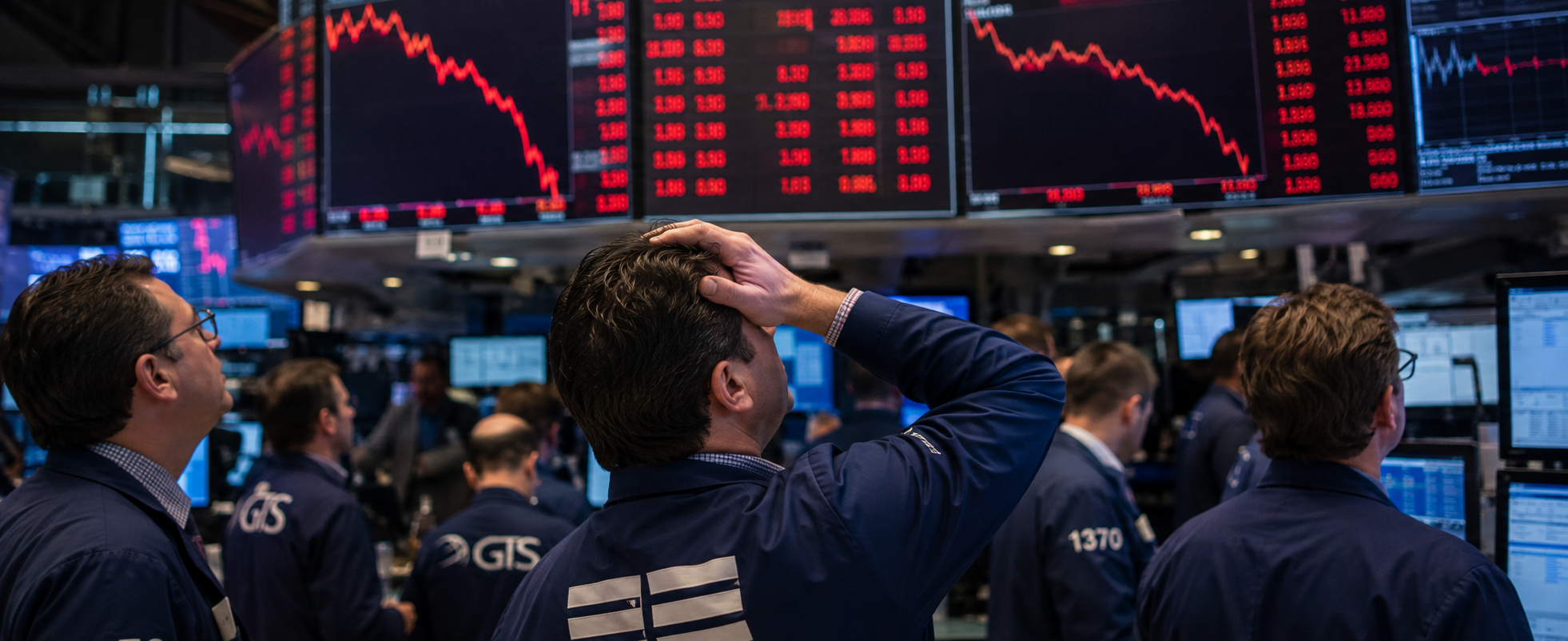
Wall Street’s major benchmarks are still holding near recent highs, but the rally’s foundation looks less secure than the headline numbers suggest.
A multi-week pullback has interrupted a string of weekly advances, and JPMorgan Chase & Co. sees the retreat as more than a routine pause.
In a note from technical strategist Jason Hunter, the bank argues that surface-level index strength is masking a shift in market internals and leadership that typically precedes trouble.
The trigger, in JPMorgan’s view, is not economic data but the slow unraveling of conviction in artificial intelligence stocks, the same trade that has powered much of this year’s gains.
That unraveling, Hunter warns, is arriving just as seasonal patterns turn historically unfavorable.
Why JPMorgan recommends caution
On the surface, nothing looks broken.
The major indexes remain in a bullish trend, and no single signal has flashed a clear warning.
What worries Hunter is happening away from the index tape: how positioning has shifted inside the market, which groups are actually leading it, and how the assets that tend to turn first are behaving; together, signals that resemble a topping process more than a healthy pause.
Late summer and early fall are historically the market’s weakest stretch, and JPMorgan sees this backdrop compounding that seasonal risk rather than offsetting it.
The gap between calm index-level performance and deteriorating conditions underneath, in Hunter’s framing, is the kind of setup investors tend to miss until it’s too late.
A different kind of rotation
The retreat from artificial intelligence and broader technology names this summer differs from prior rotations in one key way: it lacks conviction.
In the fourth quarter of 2025, capital leaving tech flowed into cyclical, pro-growth sectors, reflecting confidence in the economy.
Hunter reads today’s move differently: crowded positions are being trimmed, technology exposure pared back, and the proceeds landing in more defensive corners of the market, a pattern that looks like risk reduction rather than a fresh economic bet.
Hardware and hyperscale computing stocks tell a similar story, moving unevenly as investors question the payoff timeline on aggressive spending and struggling to reclaim resistance levels set earlier this year, evidence, in JPMorgan’s view, that buyers haven’t fully returned.
JPM now sees echoes of 2000s
JPMorgan’s sharper warning rests on a historical parallel.
Hunter says the AI trade’s trajectory echoes the run-up to 2000, when tech stocks surged for years before collapsing and dragging the market into a prolonged downturn.
The echo extends to the spending cycle underneath it: the late-stage communications equipment buildout of that era faced similar doubts about payback, much like today’s AI infrastructure spending does now.
None of this guarantees a repeat, Hunter notes, but as trading enters a period historically prone to volatility after Labor Day, he treats the parallel as a risk worth taking seriously.
JPMorgan’s message, for now, is caution rather than capitulation, a reminder that fading conviction in the market’s biggest trade rarely coexists with a rough seasonal window without consequence.
The post JPMorgan warns of a downturn ahead and AI stocks may be to blame appeared first on Invezz
